

Math anxiety is a widespread issue that affects people across different age groups and backgrounds, creating a significant barrier to learning and enjoying mathematics. This anxiety often manifests as a feeling of tension, fear, or dread when faced with math tasks, leading to physical symptoms such as sweating, shaking, and an increased heart rate, as well as psychological effects like negative self-talk and low self-esteem. Understanding the root causes of math anxiety and implementing effective strategies to overcome it can transform the learning experience, making math less intimidating and more approachable. This article provides comprehensive insights and practical tips for overcoming math anxiety, helping individuals build confidence and achieve success in mathematics. We will explore various aspects of math anxiety, its impact, and effective methods to manage and reduce it. By addressing the root causes and employing supportive strategies, anyone can improve their relationship with math and enhance their overall learning experience.
Understanding Math Anxiety
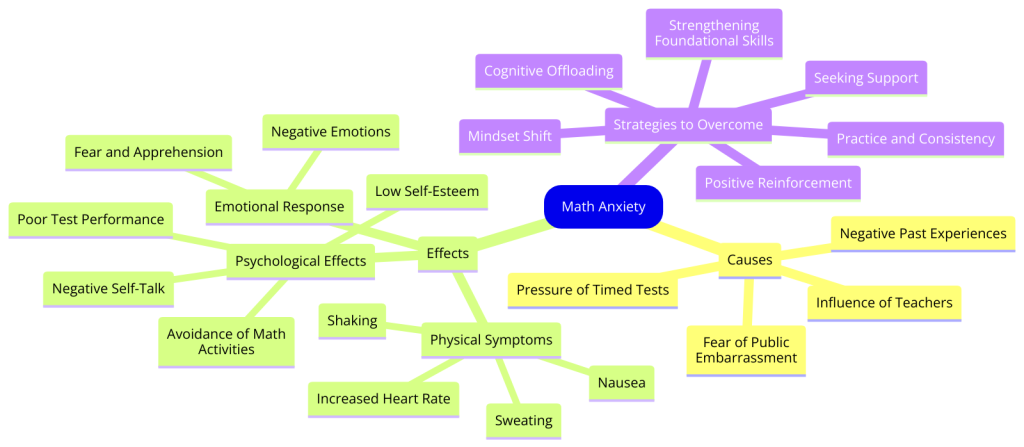
Math anxiety is an emotional response that creates fear and apprehension towards math-related tasks. It can originate from several sources, including past negative experiences, the pressure of timed tests, and a lack of foundational skills. For many, math anxiety begins in childhood, often due to an educational environment that emphasizes speed and accuracy over understanding and learning. This focus can lead to a cycle of anxiety and poor performance, making it difficult to break free from negative feelings towards math. Recognizing the signs of math anxiety, such as avoidance of math-related activities, excessive worry about getting the correct answer, and negative self-talk, is the first step in addressing and overcoming this issue. Understanding that math anxiety is a common experience can also help individuals feel less isolated and more empowered to seek solutions. Studies have shown that students with math anxiety tend to perform worse not because they lack ability, but because the anxiety interferes with their cognitive processes.
Strengthening Foundational Skills
A strong foundation in basic math concepts is crucial for overcoming math anxiety. Many individuals struggle with higher-level math because they lack fluency in fundamental skills such as addition, subtraction, multiplication, and division. Building a solid foundation involves regular practice and reinforcement of these basic concepts. Utilizing tools like math games, flashcards, and everyday situations to practice math can make learning more engaging and less stressful. For example, using apps or online platforms that provide interactive math games can help make practice enjoyable and effective. By mastering the basics, individuals can gain the confidence needed to tackle more complex mathematical problems. Studies have shown that fluency with math facts is a predictor of successful performance on standardized math tests, underscoring the importance of a strong foundational knowledge.
Practice and Consistency
Regular practice is essential for reducing math anxiety. Consistent exposure to math problems helps build familiarity and reduce fear. Starting with simple problems and gradually progressing to more challenging ones can help individuals build confidence incrementally. It is important to set aside dedicated time for math practice each day and to maintain a positive attitude towards learning. Practice can be made enjoyable through the use of interactive tools and resources that make math fun and engaging. For instance, incorporating real-world scenarios, such as calculating expenses during shopping or measuring ingredients for a recipe, can make math feel more relevant and less intimidating. The key is to practice regularly and to approach math problems with a growth mindset, viewing challenges as opportunities to learn and improve rather than obstacles to be feared.
Cognitive Offloading
Cognitive offloading is a technique that involves writing down thoughts and feelings about math before engaging in math-related activities. This process can help clear mental clutter and reduce anxiety by allowing individuals to acknowledge and address their fears. Studies have shown that writing about math anxiety can lead to improved performance on math tests, as it frees up cognitive resources needed for problem-solving and critical thinking. This technique can be particularly useful before exams or challenging assignments, providing a mental reset and boosting confidence. For example, students can spend a few minutes writing about their worries and then shift their focus to solving math problems, finding that their anxiety diminishes and their performance improves. Cognitive offloading helps to externalize worries, making them more manageable and less overwhelming.
Positive Reinforcement
Positive reinforcement plays a significant role in overcoming math anxiety. Encouragement and praise can help build self-esteem and foster a positive attitude towards math. Parents and teachers can provide positive reinforcement by celebrating small successes and milestones in math learning. This approach helps to shift the focus from fear of failure to the joy of learning and improvement. Positive reinforcement can include verbal praise, rewards, and acknowledging effort and progress, rather than just correct answers. For instance, teachers might reward students for their effort and participation in math activities, regardless of whether they get every answer right. This helps create a supportive learning environment where students feel safe to take risks and make mistakes, which are essential parts of the learning process. Consistent positive reinforcement can change a student’s perception of math from a subject of stress to one of achievable challenges.
Seeking Support
Seeking support from teachers, tutors, or peers can be incredibly beneficial in managing math anxiety. Having a support system can provide guidance, encouragement, and practical strategies for overcoming challenges. Tutors and teachers can offer personalized instruction and help clarify difficult concepts, while peers can provide a collaborative learning environment. It is important to communicate openly about math anxiety and to seek help when needed, rather than struggling in silence. For example, students can form study groups where they can share their difficulties and solutions, gaining insights and support from their peers. Additionally, parents can play a crucial role by showing interest in their child’s math learning and providing encouragement and support at home. Effective support systems help students feel understood and less isolated in their struggles.
Mindset Shift
Adopting a growth mindset is crucial for overcoming math anxiety. A growth mindset emphasizes that abilities can be developed through dedication and hard work, rather than being fixed traits. This perspective encourages individuals to view challenges as opportunities for growth and learning. Embracing mistakes as part of the learning process and understanding that effort leads to improvement can help reduce anxiety and build resilience. Parents and teachers can foster a growth mindset by reinforcing the idea that intelligence and skills can grow with practice and perseverance. For instance, instead of focusing solely on correct answers, they can praise the process of problem-solving and the effort put into learning. This shift in mindset can transform how individuals approach math, turning it from a source of stress to an opportunity for growth. Emphasizing progress over perfection can help students become more resilient and motivated learners.
In conclusion, overcoming math anxiety requires a multifaceted approach that includes strengthening foundational skills, consistent practice, cognitive offloading, positive reinforcement, seeking support, and adopting a growth mindset. By addressing the root causes of math anxiety and implementing these strategies, individuals can transform their relationship with math, building confidence and achieving success. Remember, math anxiety is a common experience, but with the right tools and mindset, it can be overcome. Embrace the journey of learning and enjoy the process of mastering math.