
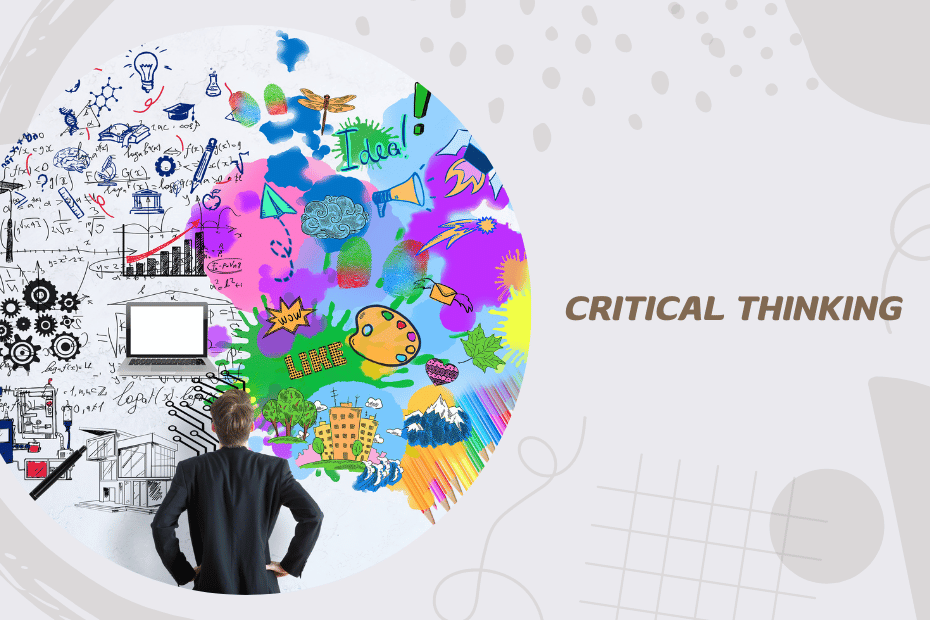
Critical thinking stands out as one of the most essential skills we can learn today. In an era where information is abundant, the ability to think critically is what separates those who can evaluate, analyze, and make informed decisions from those who simply absorb data without deeper reflection. I often find myself reflecting on why this particular skill is so crucial, especially given how rapidly our world is changing. So, let’s dive into why critical thinking may very well be the most valuable lesson any of us can learn.
Understanding Critical Thinking
At its core, critical thinking is the ability to analyze information objectively, question assumptions, and solve problems effectively. It involves assessing data, making logical connections, and thinking independently. In other words, critical thinking allows us to move beyond surface-level understanding, pushing us to explore the reasoning behind facts and decisions. As someone who values thoughtful decision-making, I see critical thinking as the bedrock of effective problem-solving in both personal and professional life.
Why Critical Thinking is Important in Education
In educational settings, critical thinking empowers students to think beyond memorization. Instead of just learning the “what,” students learn to ask “why” and “how.” This process fosters deeper understanding and application of knowledge in real-world situations. Many teachers and educational leaders, like those at Texas A&M, are now emphasizing critical thinking in their curricula to better prepare students for the workforce. When students develop critical thinking skills, they are more capable of tackling complex problems, adapting to new challenges, and making informed decisions.
Critical Thinking and Problem-Solving
One of the most impactful aspects of critical thinking is its role in enhancing problem-solving abilities. By critically analyzing situations, individuals can identify multiple potential solutions, weigh their pros and cons, and select the best course of action. In both business and everyday life, this ability is invaluable. In my own experience, I’ve seen how critical thinking leads to better decision-making by encouraging a thorough examination of every angle before taking action. Whether we are addressing workplace challenges or personal dilemmas, applying critical thinking can lead to more thoughtful and effective solutions.
Application in Real-Life Scenarios
Critical thinking isn’t just confined to academia or the workplace; it permeates every aspect of our lives. Take something as simple as making a purchase or evaluating a news story. Without the ability to think critically, we are susceptible to misinformation or making choices that may not serve our best interests. Critical thinkers, on the other hand, question the reliability of sources, consider the long-term implications of their decisions, and are generally more resilient to persuasion by unsubstantiated claims.
For instance, I recall a school project where students had to propose environmentally sustainable initiatives. Instead of opting for the most obvious solutions, like recycling, the students used critical thinking to devise a comprehensive plan that considered multiple variables, such as cost and long-term environmental impact. This not only made their proposal more effective but also demonstrated how critical thinking allows for more creative and practical solutions to complex problems.
The Role of Critical Thinking in the Workplace
In today’s job market, employers are looking for more than just technical skills; they are seeking employees who can think critically. Why? Because industries are evolving rapidly, and companies need individuals who can adapt, solve problems, and make informed decisions in real-time. Critical thinking enables professionals to analyze situations from different perspectives, making it easier to navigate uncertainty and develop innovative solutions.
I’ve seen firsthand how employees with strong critical thinking skills are more equipped to tackle challenges, whether it’s troubleshooting an issue or strategizing a new business direction. In fact, reports from various industries highlight the growing need for critical thinkers, as their ability to approach problems with a balanced, thoughtful mindset often leads to better outcomes.
Teaching and Encouraging Critical Thinking
Cultivating critical thinking is not always straightforward. It requires consistent practice and the development of habits like asking questions, evaluating information, and reflecting on one’s own thought process. I’ve found that one of the most effective ways to encourage critical thinking is through activities that require students or employees to analyze and synthesize information rather than simply recall it.
Debates, case studies, and collaborative projects are great tools for fostering this skill. In the classroom, teachers are increasingly turning to problem-solving activities and Socratic questioning techniques to develop students’ critical thinking abilities. These approaches encourage students to engage deeply with material and understand the reasoning behind different perspectives, which is far more valuable than rote memorization.
In Conclusion
At the end of the day, critical thinking is more than just a skill; it’s a mindset. It’s about approaching every situation—whether in work, education, or personal life—with curiosity, openness, and a willingness to question assumptions. This is why I believe critical thinking is the most valuable lesson anyone can learn. In a world filled with information, the ability to think clearly and critically is what helps us make the best decisions, overcome challenges, and continue growing as individuals. If there’s one lesson worth prioritizing, this is it.